
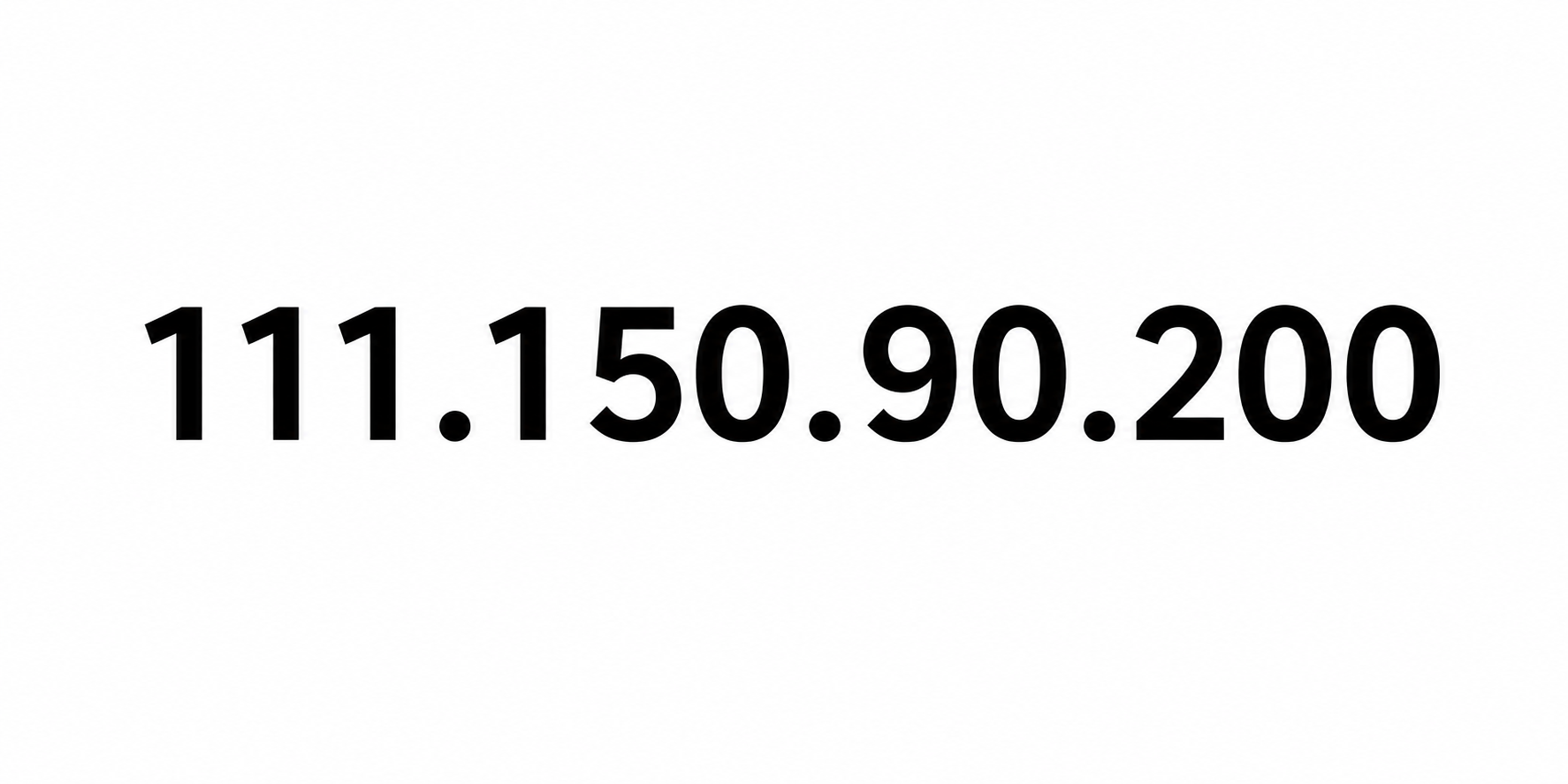
The term 111.150.90.2004 has gained attention across search engines due to confusion about whether it represents a real IP address or an error in formatting. Many users encounter this string in logs, websites, or copied data and assume it is a valid network identifier. However, understanding its structure reveals important insights about how internet addressing actually works.
The increasing searches for 111.150.90.2004 highlight a common issue in digital literacy, where users struggle to distinguish between valid and invalid technical formats. This article will break down the meaning, structure, and correctness of this string while explaining why it often appears in online discussions.
At its core, 111.150.90.2004 is not a valid IP address because it does not follow the standard IPv4 format rules. Still, its frequent appearance makes it important to analyze its origin, usage context, and the mistakes that lead to such patterns.
What Is an IP Address and How It Works
An IP address is a unique numerical label assigned to each device connected to a computer network. It functions like a digital home address, allowing data to travel between devices across the internet. Without IP addresses, communication between servers, websites, and users would not be possible.
The structure of a standard IPv4 address consists of four numerical segments separated by dots. Each segment, called an octet, must range from 0 to 255. This rule ensures that every IP remains within a controlled numerical system that networking devices can interpret efficiently.
When analyzing 111.150.90.2004, it becomes clear that it breaks this fundamental rule because the last segment exceeds the allowed range. This is why 111.150.90.2004 cannot be classified as a valid IPv4 address, even though it resembles one at first glance.
Another important concept is IPv6, a newer version of internet addressing designed to replace IPv4 limitations. However, even IPv6 does not use the same structure, meaning 111.150.90.2004 still fails to match any recognized standard format.
Why 111.150.90.2004 Is Not a Valid IP Address
The main reason 111.150.90.2004 is invalid lies in its final numerical block. In IPv4 addressing, each section must stay within 0 to 255, but the value 2004 exceeds this limit significantly. This immediately disqualifies it from being a proper IP address.
Another issue is structural inconsistency. Valid IP addresses are strictly formatted in four parts, but the interpretation of larger numbers suggests either a typing mistake or a misinterpretation of data. This is why experts often categorize 111.150.90.2004 as an error rather than a real network identifier.
In some cases, strings like 111.150.90.2004 appear due to system logging bugs or incorrect database entries. These errors can mislead users into thinking they are viewing real IP addresses when they are not. Understanding this distinction is essential for accurate digital analysis.
Ultimately, 111.150.90.2004 serves as an example of how small formatting mistakes can create completely invalid network data that still appears realistic to untrained eyes.
Common Mistakes When Entering IP Addresses
One of the most common mistakes that leads to invalid strings like 111.150.90.2004 is incorrect typing. Users may accidentally add extra digits or misplace numbers, resulting in a format that no longer matches IPv4 standards.
Another frequent issue occurs when users confuse IP addresses with port numbers or system identifiers. In some technical environments, additional numeric values are attached to IP-related data, which can cause misunderstandings when copied incorrectly.
Copy-paste errors from logs or software outputs also contribute to invalid formats. When data is transferred without validation, extra characters or corrupted values may appear, producing strings such as 111.150.90.2004.
Understanding these mistakes helps prevent misinterpretation and improves accuracy when working with network information. It also highlights why validation tools are essential in technical environments.
How to Identify a Valid IP Address
To determine whether an IP address is valid, it is important to check each segment individually. A proper IPv4 address must contain four numeric parts, each ranging between 0 and 255. Any value outside this range automatically indicates an invalid address.
For example, a valid IP might look like 192.168.1.1 or 111.150.90.200, both of which follow proper formatting rules. In contrast, 111.150.90.2004 fails validation because its final segment exceeds the allowed range.
Online IP validation tools can help users quickly verify whether an address is correct. These tools analyze structure, range, and formatting to ensure accuracy. They are especially useful for beginners or system administrators managing large datasets.
By understanding these rules, users can easily distinguish between valid IP addresses and errors like 111.150.90.2004, improving both technical knowledge and data accuracy.
Why You Might Encounter 111.150.90.2004 Online
There are several reasons why users may come across 111.150.90.2004 during searches or system analysis. One possibility is logging errors, where software incorrectly records network information due to formatting issues.
Another reason is spam or bot-generated content. Automated systems sometimes generate random numeric strings that resemble IP addresses but do not follow real standards. These entries can appear in databases or search results unexpectedly.
In some cases, 111.150.90.2004 may also appear due to outdated or corrupted system records. When data is not properly validated, invalid values can persist and spread across platforms.
Understanding these causes helps users recognize that not every IP-like string is genuine, especially when encountering unusual formats such as 111.150.90.2004.
Difference Between IP Address and URL
An IP address is a numerical identifier used for network communication, while a URL is a human-readable web address used to access websites. Both serve different purposes but work together to help users navigate the internet.
For example, a URL like example.com is translated into an IP address by DNS servers before reaching the correct destination. This process allows users to avoid memorizing complex numeric addresses.
Unlike IP addresses, URLs contain domain names, paths, and sometimes parameters. This structure makes them more user-friendly and meaningful compared to raw numeric identifiers.
Strings like 111.150.90.2004 are unrelated to URLs and cannot function as either a domain or a valid IP address, making them technically invalid in both contexts.
Security Concerns Related to Invalid IP Formats
While 111.150.90.2004 is not a valid IP address, encountering such strings can still raise security concerns in certain situations. For example, malformed data may indicate system errors or unauthorized modifications in logs.
Cybersecurity systems often rely on accurate IP tracking to identify threats. If invalid entries appear, they may disrupt monitoring processes or create confusion during analysis.
In some cases, attackers may use fake or malformed IP strings to bypass simple detection systems. This makes validation an important part of network security practices.
Therefore, recognizing that 111.150.90.2004 is invalid helps maintain better awareness of potential data integrity issues in digital environments.
How to Fix Invalid IP Address Issues
Fixing invalid IP issues begins with identifying the source of the error. If a string like 111.150.90.2004 appears, the first step is to check whether it was manually entered or generated by a system.
Correcting formatting involves ensuring each segment stays within the 0–255 range and removing any extra digits. For example, adjusting the last segment of 111.150.90.2004 would be necessary to convert it into a valid format.
Using validation tools can help automatically detect and correct errors. Many networking tools provide real-time feedback to prevent incorrect entries from being saved or processed.
Proper training and awareness also reduce the chances of repeated mistakes, ensuring better handling of IP-related data in the future.
Advanced Understanding of Network Addressing
Networking systems rely on structured protocols to ensure smooth communication between devices. IP addresses form the foundation of this system, allowing billions of devices to connect globally.
When examining invalid formats like 111.150.90.2004, it becomes clear how strict these protocols are. Even a small deviation from the standard rules can render an address unusable.
Advanced systems also use subnetting, routing, and DNS resolution to manage traffic efficiently. These processes depend heavily on valid IP structures, highlighting the importance of accuracy.
Without proper formatting, as seen in 111.150.90.2004, network systems cannot interpret or route data correctly.
Real-World Examples of IP Address Errors
In real-world scenarios, IP address errors often occur in server logs, application debugging, and network configuration files. These errors can lead to confusion if not properly identified and corrected.
For instance, administrators may encounter strings similar to 111.150.90.2004 when analyzing traffic logs. Such entries usually indicate data corruption or formatting mistakes rather than actual network activity.
Another example includes misconfigured devices that generate invalid outputs during communication attempts. These issues can disrupt system performance if left unresolved.
By studying these examples, it becomes easier to understand why 111.150.90.2004 appears and how to handle similar cases effectively.
Conclusion: Final Understanding of 111.150.90.2004
After a detailed analysis, it is clear that 111.150.90.2004 is not a valid IP address. Instead, it represents a formatting error or misinterpreted data that does not follow IPv4 standards.
Understanding why 111.150.90.2004 is invalid helps improve awareness of proper network structures and prevents common mistakes in digital environments. It also highlights the importance of validation in technical systems.
By learning the rules behind IP addressing, users can easily identify incorrect formats and avoid confusion in future network-related tasks.
FAQs
Is 111.150.90.2004 a real IP address?
No, 111.150.90.2004 is not a real IP address because it does not follow IPv4 formatting rules, especially in the last segment which exceeds the allowed range.
Why is 111.150.90.2004 invalid?
It is invalid because IPv4 addresses require each section to be between 0 and 255, and the value 2004 violates this rule.
What is a valid IP address format?
A valid IPv4 address consists of four numeric segments separated by dots, such as 192.168.0.1, with each segment ranging from 0 to 255.
Can IP addresses contain four-digit numbers?
No, IPv4 addresses cannot contain numbers larger than 255 in any segment, making four-digit values invalid.
Why do I see 111.150.90.2004 online?
It may appear due to typing errors, system glitches, or corrupted data entries in logs or databases.
Is 111.150.90.2004 dangerous?
It is not dangerous itself, but its presence may indicate data errors or misconfigured systems that should be checked.
How do I verify an IP address?
You can use online IP validation tools or manually check whether each segment is within the correct range.